Mariette Liefferink, head of the Federation for a Sustainable Environment, never wears gold. She knows too much that besides the precious necklace, it would imply carrying responsibilities for environmental and socioeconomic impact in the world’s largest gold mining region.
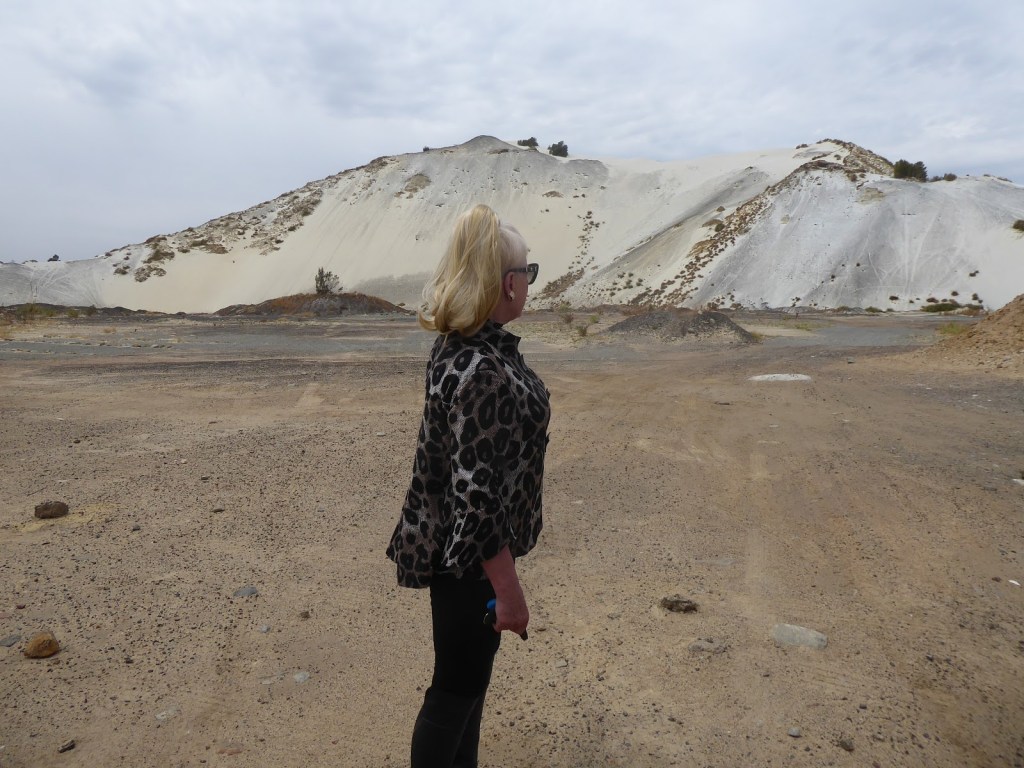
This impact is visible during her “toxic tours” where she takes visitors in Krugersdorp and Randfontein to gold mines areas, west of Johannesburg, from radioactive mine dumps to toxic open pits. “This is all Mintails,” she claims, before coughing because of the mine dust.
Mintails’ saviour complex
Mintails is a liquidated gold mining and tailing processing company listed on the Australian Stock Exchange which operated in the West Rand of the Witwatersrand basin since 2006. The principal shareholder is the wealthy London-based Harbour family whose residences are located in Monaco and who are close friends of the queen of England.
“They motivated their operations by stating they were a rehabilitation company,” explains Liefferink. Indeed, we can read on Mintails Linkedin profile that it “plays an important role in addressing the ‘rehabilitation’ requirements on the Witwatersrand basin resulting from historic mining legacies”.
The firm claims it is “developing a single solution on the West Rand for multiple tailings facilities by mining historical tailings and depositioning these into a single deposition facility identified for permanent closure”. It claims that “through open cast mining, Mintails is removing the on-surface reef outcrops and stabilising the land, allowing the safe use of these areas for the surrounding communities”.
In other words, Mintails “would come in to reclaim the dumps and rehabilitate the footprint, by reinjecting the gold discovery benefits in the rehabilitation of the entire area,” explains Liefferink. Yet, “what Mintails did since 2006 under the mining right of 2006 is to only reclaim the profitable parts of the dumps,” she says.
‘You cannot touch a company during business rescue’
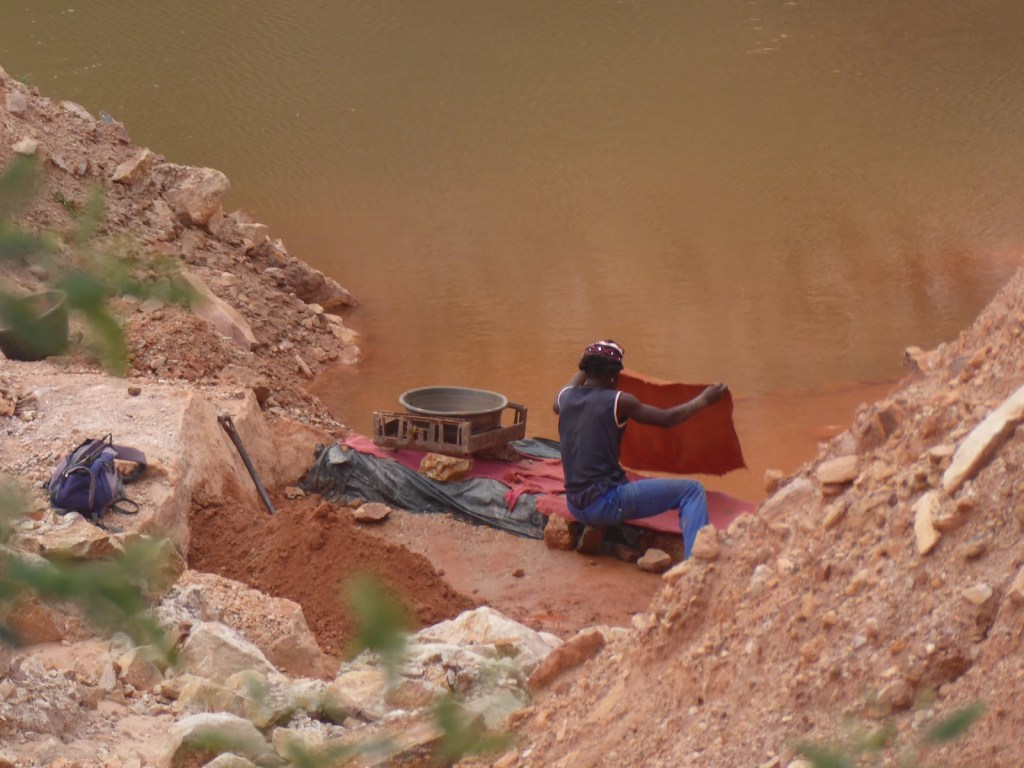
Mintails applied for business rescue in October 2015 but went into liquidation in September 2018. “You cannot touch a company during business rescue,” explains Mariette.
It left the area with an unfunded environmental liability of R485 million. Yet its environmental rehabilitation funds contained only R25 million financial provision.
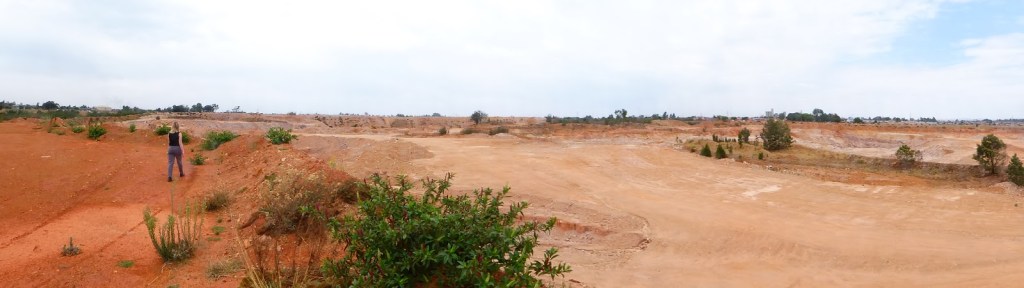
“When Mintails went bankrupt, they didn’t have any fund to close the mine. So they just left the mess behind,” details David Van Wyk, lead researcher at the Benchmark Foundation.
The government made an oversight visit, then, and found that Mintails operated without a board of mining rights between 2012 and 2018 in open cast mining. They operated without an approved environmental management programme report, without a rehabilitation plan, with no financial provisions and without a BEE partner, a company whose owners are black.
« When Mintails went bankrupt, they didn’t have any fund to close the mine. So they just left the mess behind”
The future of gold mining doesn’t look bright
“Now you have a situation where big companies like AngloGold Ashanti, Anglo American or Goldcorp, who could afford to close mines, have sold them because they were not profitable on a large scale exploitation. The buyers are medium and small companies who don’t have the resources to close and rehabilitate the mines so they just leave,” explains Van Wyk.
“It is predicted that big mining corporations will have left South Africa by 2025,” he says. They often discount the mine closure funds from the mine selling price. So the new company buys the mine without any historic closure fund in place.
“We are in trouble for 6 000 abandoned mines. We have mines being abandoned all the time. Mintails went bankrupt, no rehabilitation. Central Rand Gold went bankrupt, no rehabilitation. I’m sure we will read in the newspapers about many more. Eventually we will see DRD going bankrupt,” he worries.
“The one gets the big bucket and then unwraps. The next one gets the bucket but smaller. The last one gets the smallest bucket with a gift, which is the pollution,” states Liefferink.
“We are in trouble for 6 000 abandoned mines »
What the law says
Chapter 4 Section 40 to 47 of the Mineral and Petroleum Resources Development Act, from the Department of Energy, clearly states how much should be allocated for mine closure and rehabilitation.
“The holder of a prospecting right, mining right, retention permit or mining permit remains responsible for any environmental liability, pollution or ecological degradation (…) until the minister has issued a closure certificate” (Section 43)
Furthermore, Section 45 enumerates the minister’s powers to recover costs in the event of urgent remedial measures. Yet, mining companies avoid their duty to close and rehabilitate mines either by selling it or by going into bankruptcy and simply abandoning the mines.
The Federation for Sustainable Environment managed to amend Section 28 of the National Environmental Management Act (NEMA) to make the polluter responsibility principle retrospective. It states that
“every person who causes, has caused or may cause significant pollution or degradation of the environment must take reasonable measures to prevent such pollution or degradation from occurring, continuing or recurring”
Hence, mining companies cannot argue it is historic pollution.
‘The laws are excellent. The dilemma is the political will to implement them’
Liefferink
“Anglo-American Corporation has a mine closure toolkit on its website. Excellent tool kit but they never applied it because they always sell the mine before closing,” confirms Van Wyk.
An ‘environmental catastrophe’
The Wonderfonteinspruit was classified in 1954 as one of the seven wonders of South Africa. It flows through the richest gold mining region in the world. “Since mining it died and its waters became toxic and corrosive,” says Liefferink. “It is used for irrigation, recreational purposes such as fishing and swimming, and supplies 400 000 people in Potchefstroom for drinking purposes,” she develops.
In 2009, the former Department of Water Affairs and National Nuclear Regulator (NNR) classified 36 sites in the Wonderfonteinspruit as radioactive hotspots. Among them, the Lancaster Dam was declared the most urgent since Mintails toxic waters spread into the dam.
The settlements found inside the river contain elevated levels of platinum, cobalt and uranium. These toxic minerals have been found in the kidneys, livers, tissues and bones of the cattle drinking in the Wonderfonteinspruit. Another research titled “The heron that laid the golden eggs” found elevated levels of metals in birds eggs in the Vaal River catchment.
“It is the signature of acid mine drainage,” explains Liefferink, in other words, the outflow of acidic water from the mines.
The poorest communities are paying the price of mining
© Amandine Hess
Liefferink explains that the model for mining is based on an externalisation of the cost model. So, when a mining company applies for mining rights, it justifies its financial viability by arguing the development and operational costs. What is not put on the balance sheet are the environmental and socio-economic costs. Those are externalized to communities mostly characterized by widespread poverty, to financially indebted municipalities, to the state, to future generations or to the “mute environment”.
Johannesburg is the most radioactive city in the world, according to Professor Anthony Turton.
400 000 people are living on 380 radioactive sites in the Witwatersrand basin
The Benchmark Foundation conducted a study in the Snake Park area in Soweto where it took hair samples of inhabitants. They contained high levels of arsenic, uranium and other toxic materials. “This is all because of the level of uranium and arsenic in the mine dumps,” explains Van Wik.
This area is stricken by high levels of respiratory illnesses and cerebral pulses, a mental and physical disease which prevents the growth of a child.
“It costs R14 000 a month to have such a kid. If you are a poor working class parent in Soweto, there’s no way you can afford that child. We found children like this abandoned in the streets, chained to furniture, hidden in back rooms,” he says.
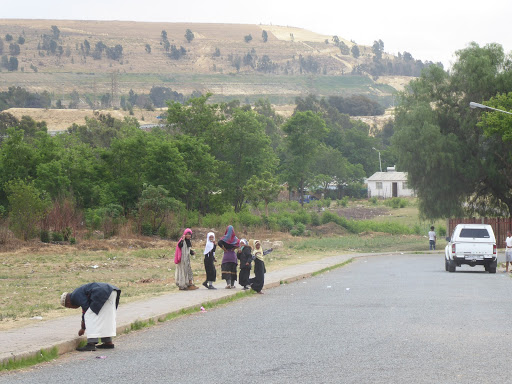
Liefferink warns that there should be precautionary measures taken instead of reverse measures in order to protect communities from the risks and hazards which will continue for many years after mining closure. “There is near certainty of the impact of dust on human health, and a near certainty of the impact of high acidity and salinity on fauna and flora,”she says.
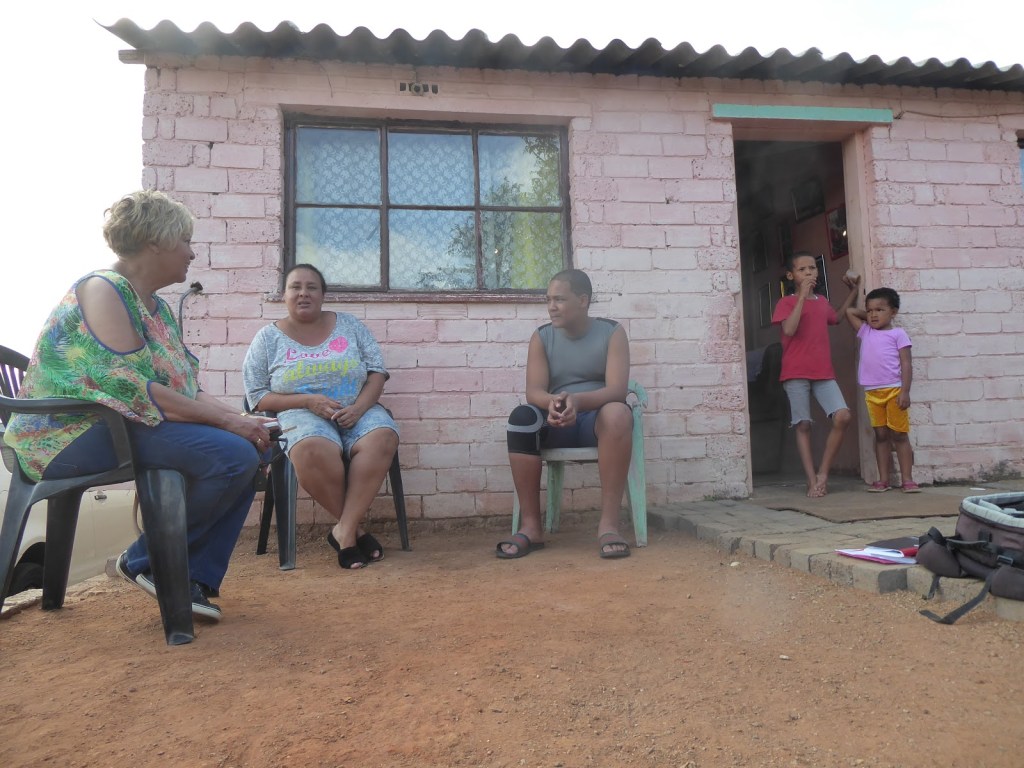
Carol Kara and Vernon, activists of the Riverlea Mining Forum, are advocating to defend their communities affected by DRD and Mintails mining activities, among others. The Coloured neighborhood of Riverlea is an example of communities which have been established after the mine dumps by councillors with very short-term political interests.
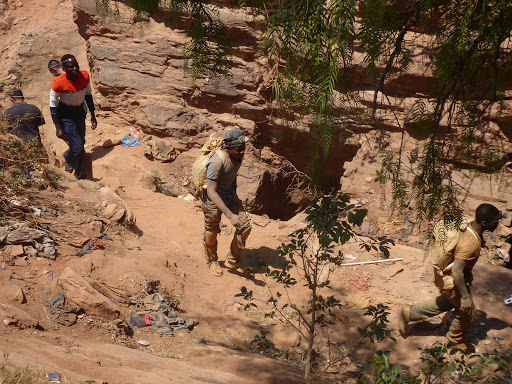
Besides illnesses, the community is complaining from the Zama Zamas, illegal workers who are mining right in their neighborhood. “They are thousands mining under our feet,” explains Vernon. Their presence is a consequence of Mintails’ and other companies’ departure without mine closure and rehabilitation measures.
The TC Esterhuysen primary school is located right at the border of George Harrison heritage site, where gold was first found in the Witwatersrand in 1886. Now abandoned, the mine is illegally exploited by the Zama Zamas. “They are using dynamite to dig underground. But there are some gas, petroleum and water pipes around here. One day there will be a catastrophe,” worries Kara.
According to Tracy-Lynn Humby, Professor of Law at the University of the Witwatersrand, regulations don’t say anything directly regarding damages caused to communities. “Section 28 of the National Environmental Management Act (NEMA) imposes a duty of care on everyone not to cause serious environmental degradation. So the duties are owed to the environment, rather than to communities,” she states.
Yet Mintails is violating human and constitutional rights such as “the right to an environment not harmful to health or well-being (Section 24); the right to dignity (Section 11); the right of access to sufficient food and water (s 27); and the rights of the child (s 28),” she reminds.
Liefferink wishes to restore some sense of justice, so that the polluters pay and that the impact and the risks are not being carried by the communities that had no share in polluting activities and that didn’t benefit from them.
“We have exhausted all the possible remedies” she says. Hence, the Federation for a Sustainable Environment is planning to take Mintails to court in February.
 Johann(a)hessburg