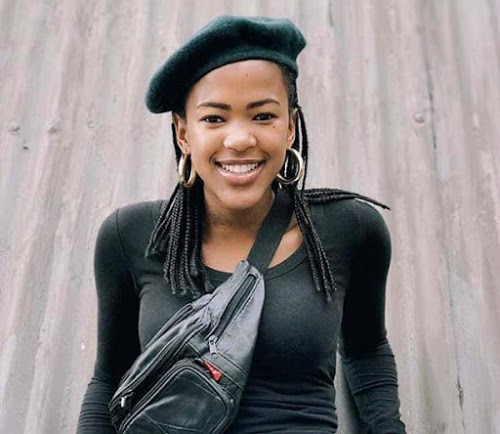
Luyanda Botha, who pleaded guilty for the rape and murder of University of Cape Town student Uyinene Mrwetyana, was handing down three life sentences by the Western Cape High Court on November 15th 2019. It only took three months for the National Prosecuting Authority (NPA) to finalize the murder and rape trial in this high profile case of femicide. Justice has been done. It is an achievement to celebrate. Yet, considering the short amount of time it needed for the murderer to be brought to justice some wonder if justice handles differently high profile cases of femicides.
South Africa’s Fallen Angels
“The loving list of names below represents the beautiful souls of women and girls who have tragically been murdered in South Africa”. The South Africa’s Fallen Angels list was begun by Cindy September on the group SA Women Fight Back in August 2019. While it originally compiled 285 names, the non exhaustive list now stands at 398 names. This initiative reminds us some of the too many names, faces and stories hidden behind cold statistics. A woman is murdered every three hours in South Africa. 2 930 adult women have been murdered in 2017/18, according to the South African police service (SAPS). The South African murder rate for adult women was 15.2 for 100 000 in 2017/18. We all remember the context of the publication too well. August 2019, while the country should have been celebrating Women’s Month, it was mourning new victims of femicides and protesting against the backdrop of an increase of gender-based violences (GBV) and violences against women (VAW).
What is a high profile case ?
While some of these femicides became high profile cases, most do not make headlines. The report “Managing high profile cases”, published by the National Center for State Courts, defines a high profile case as “a case that attracts enough media or public attention that the court must or should make significant alterations to ordinary court procedures to manage it”. This case might be the result of a celebrity or pro athlete being arrested, such as South African professional sprinter Oscar Pistorius convicted in 2015 for the 2013 murder of his girlfriend Reeva Steenkamp. It can also be the result of a “particularly egregious crime”, such as the murder of UCT student Uyinene Mrwetyana on August 8th 2019 by Luyanda Botha at the Clarenreich Post Office in Claremont.
“I had cases that received media coverage because of the perpetrator, others because of the victim. Of course I’ve had cases that became high profile because of media coverage”, explains Carina Coetzee, Prosecutor at the National Prosecution Authority (NPA). Uyinene is the typical example of the media making someone high profile. Coetzee says Uyinene’s case is high profile specifically because of the ordinariness of the action that she had committed that day. “She went to fetch a parcel from the post office. I have to say I, on Saturday, have been fetching a parcel from the post office and I was scared when I walked in there and I suddenly saw I was alone”, she says. The place of the murder also played a role in the case becoming high profile : “A government office is the one place where you could not have expected such a crime to happen”, states Coetzee.
Other factors play a role besides the perpetrator being famous or the level of atrocity. “Uyinene Mrwetyana, Jesse Hess, and Leighandre ‘Baby Lee’ Jegels were university students. Universities are very politicized spaces right now with the 2015 #RhodesMustFall and #FeesMustFall movements. They are public spaces which make the news more quickly. Universities are spaces where students should be safe and able to think freely. They educate the next leaders of our society”, analyzes Mbalenhle Matandela, Researcher at the Centre for the Study of Violence and Reconciliation. “Those were young, innocent victims who had so much potential”, she deplores. “Leighandre ‘Baby Lee’ Jegels was a well-known champion boxer, murdered by her boyfriend. It shows that no matter how famous or strong she is, any woman, wherever she lives, can be killed because of intimate partner violence (IPV)”, she says.
‘Less than 20 % of femicides get covered in the media’
In her PhD thesis on the media coverage of femicides in South Africa, Nechama Brodie, journalist and head of TRI Facts, found that in 2012/2013 “over 2,500 women were murdered but only around 428 of these murders were covered in the press”. She concludes that less than 20% of femicides get covered in the media. “We can see that the media depicts a very specific ‘idea’ of femicide, that does not correlate with the reality of femicide. Particular discrepancies are that intimate partner violence is underreported in the media, compared to its actual prevalence; white victims are slightly over-represented (across all media), and also tend to receive significantly more media coverage than victims of other races; in Afrikaans-language media, white women represent the majority of media coverage of femicide (this is much more significant than in the English press, where black victims make up the majority of victims, closer to the actual distribution)”, writes Brodie.
‘Media coverage of femicides is strongly skewed along racial lines’
Brodie found that there were huge disparities in news coverage of femicides. “The median number of articles per femicide was three, with the mode (most commonly occurring figure) being just one article per victim. Only six victims received coverage of more than 100 articles each ; and of these women, only one (Anene Booysen) was not white”, she states. The cases that received the largest amount of media coverage in 2012/13 were Reeva Steenkamp (1,827+ articles), a model shot by her boyfriend, Paralympian Oscar Pistorius, on Valentine’s Day 2013 ; Anene Booysen (679 articles), a teenager gang-raped and disemboweled on a construction site while coming home from a bar; Marthella And Christelle Steenkamp (230 articles each) “who were murdered by their son/brother Deon in an attempted staged farm attack near Griekwastad”; Charmaine Mare (109 articles), “a teenager who was murdered in Kraaifontein by the boyfriend of a friend’s mother”; and Rosemary Theron (109 articles), “a stilt-walker and clown who was murdered by her daughter and her daughter’s boyfriend in Clovelly”, she found.
‘Mega cases’ influence public understanding of femicides
Hence, “there is not ‘fixed’ measure to say what is high-profile. In this context, even a murder case that receives 20 articles would be high profile relative to everything else, considers Brodie. Having said that, what we tend to see is that each year there are one or two ‘mega cases’ that tend to dominate the media landscape”. In 2012/13, the two ‘mega cases’ were Reeva Steenkamp and Anene Booysen. Previous ‘mega cases’ would be Anni Dewani in Cape Town, or Jayde Panayiotou in Port Elizabeth. Brodie warns that these ‘mega cases’ might influence public perception and understanding of femicides. “These cases tend to dominate news cycles, and basically define for the public what they think femicide is about (usually not correctly at all)”, she worries. Brodie’s research also showed that “a high-profile femicide case can cause a minor immediate bump in coverage of femicide, but long-term it tends to actually diminish media coverage, as the mega cases take up all the resources”.
The media ‘are not a social service funded by the government’
There are multiple reasons to why the media report more on some cases than on others, considers Nechama Brodie. First, because of shrinking resources and staff, newsrooms no longer have “dedicated crime reporters” and “separate court reporters”. “It is also not possible to send journalists out to all of the various courts around the country”, she explains. Second, because of the high rate of crime in South Africa, the media does not have the capacity to cover all of these murders, “unless our newspapers became only crime stories”, says Brodie. As a result, newsrooms have to make a selection. “Newspapers will tend to allocate more resources to stories that they feel will have a greater resonance with their readership”, explains the researcher. For instance, newsrooms consider that “the murder of a middle-class suburban mother of two” will attract more public interest than “the death of an unemployed woman who lives in an informal settlement”. “This would be easy to get self-righteous about, and I have seen sessions where people demand that the media cover more women’s deaths – but honestly, they also have to sell newspapers, they are not a social service funded by government”, concludes Brodie.
High profile cases can be a ‘nightmare’ for jurisdictions
The report “Managing high profile cases”, published by the National Center for State Courts, warns that “the additional pressure on the court system caused by the presence of the media or the public that the case attracts can be a significant challenge”. Mbalenhle Matandela believes that a high profile case may put pressure on the justice system “because all eyes are on the justice”.“High profile cases, you can’t lose. It’s a make or break career thing”, states NPA Prosecutor Coetzee.
Yet, the public does not only mobilize for high profile cases. Even if a femicide does not make the headlines and does not become a high profile case nationally, it does affect the victim’s relatives and communities locally. Communities often gather at femicide trials, to support the family, voice their outrage, present petitions or protest against justice decisions. For instance, in October 2018, bikers gathered to stage a mass ride to Cape Town Magistrates’ Court to protest suspect bail at the murder case of Zelda van Niekerk.
However, Nechama Brodie believes that protests such as #TotalShutdown have a limited impact on justice : “I think petitions and protests are often self-serving rather than causing any improvement or necessary change to justice. I’m not saying people shouldn’t protest, but for me it is more a sense that it is a platform to express communal emotion, rather than an effective way of lobbying for change. If you genuinely want change, you have to ask for something specific, not just ‘end violence against women’”.
“What it basically stands for is basically for the public to express how they perceive this particular crime. So the Court can’t take it into account”, believes Prosecutor Coetzee. Yet, she considers that such protests are not an attempt to put pressure on the justice system, but rather it is more an attempt to enforce legislation : “Our criminal laws govern sentence prescription by stating minimum sentences. The Court applies it as if it was the maximum sentence. But it’s not, it’s the minimum sentence. So that’s basically what women strive to do for these protests. Just to tell the Court that we are aware of the fact that you apply it incorrectly”. According to her, “if an offense is really rife in your community, it is an aspect to be taken into account. If community members feel that the court is too lenient in this specific crime, then you can argue for aggravation of sentences”.
The law does not serve public opinion but hard facts
The Court makes a distinction between public interest and public opinion. “In public opinion the accused’s head should be chopped off. In the public interest the perpetrator should be treated fairly because you might become an accused person and then you would want a fair trial”, explains Prosecutor Coetzee. Following the death of Uyinene in August and the upsurge of femicides, some people called for the reinstatement of the death penalty, abolished in 1995. “Remember there are people who still protest and ask for the death penalty, so I very much hope public opinion does not unduly influence our justice system”, says Brodie.
The Court is taking into account public interest, not public opinion. In State v Pillay, Judge Jacqui Henriques reminded in the judgement on sentence introduction that “the court must consider the factors referred to in S v Zinn, being the interests of society, the personal circumstances of the accused and the nature of the offences that have been committed”. He further states that “an appropriate sentence should also have regard to or serve the interests of society, as the first element of the Zinn triad, which is the protection of society’s needs, and the deterrent of would-be criminals”. On the opposite, Prosecutor Coetzee explains that it is not in the public interest to abide by public opinion “because public opinion really often takes away public’s rights”.
‘Righteous anger should not becloud judgment’
In 2016, a CCTV footage of Dhayalan Pillay shooting his ex girlfriend Annelene Pillay as she exited her workplace in Durban went viral on social media. It led to a public outcry and people called for Pillay to be handed down a life sentence. Yet, Judge Jacqui Henriques identified mitigating factors such as Pillay being remorseful. Hence Pillay was sentenced to 25 years in prison.
The objectives of sentencing are prevention, rehabilitation, deterrence and retribution. The court must weight these four objectives when giving a sentence. On the other hand, society demands that offenders be punished for their crimes. In State v Pillay, Judge Jacqui Henriques reminded that public interest and deterrence shall not be over-emphasized. Indeed, The Supreme Court of Appeal in S v Scott-Crossley said that “any sentence imposed must have deterrent and retributive force. But of course one must not sacrifice an accused person on the altar of deterrence”. It further stated that “it is true that it is in the interests of justice that crime should be punished. However, punishment that is excessive serves neither the interests of justice nor those of society”.
Judge Henriques reminded that the law does not serve public opinion or emotion, but hard facts : “I am aware of the huge public presence both in the lower court and when this matter commenced. Despite this, however, a court must not overemphasise one factor and ultimately a balance must be struck”. In S v Mhlakaza & another Harms JA held that “It remains the court’s duty to impose fearlessly an appropriate and fair sentence even if the sentence does not satisfy the public”.
Lastly, the Court has to remain independent. In S v Makwanyane & another, the court stated that “public opinion may have some relevance to the enquiry, but, in itself, it is no substitute for the duty vested in the court; the court cannot allow itself to be diverted from its duty to act as an independent arbiter by making choices on the basis that they will find favour with the public (…) righteous anger should not becloud judgment”.
The risks of media coverage in criminal cases
Freedom of the press and the right to a fair trial are two fundamental rights which can enter in conflict during the media coverage of a criminal case. Whereas some argue that public trials and media coverage are necessary for the transparent administration of justice, research conducted by the UK-based non-governmental organisation Fair Trials International has shown that excessive media coverage can breach the right to a fair trial.
In South Africa, the constitutional right to a fair trial is enshrined in section 35 of the Constitution. It guarantees the right to be presumed innocent until proven guilty. “Without this right, a fair trial wouldn’t be possible”, states Coetzee. She considers that the presumption of innocence is often not respected by the public and media campaigns. “I feel it is extremely unfair. It is against someone’s constitutional rights”, she warns.
“The media landscape has changed, explains Mbalenhle Matandela. Naming and shaming are wide on social media. Uyinene’s perpetrator name was used without the mention ‘alleged’ when women spoke out. Social media is tired of being careful. Media and justice are separated for a reason. The judiciary just looks at the fact; the media doesn’t”. Yet, the researcher warns that diffamation should be avoided on social media. Moreover, Nechama Brodie believes that the non respect of the presumption of innocence “is a societal problem, which the media reflects rather than creates. Media usually avoids directly stating the guilt or innocence of someone who is accused, but the way accused are covered is definitely not equal-handed”.
‘The impact of pretrial publicity is irrelevant in South Africa since there is no jury’
It would be even more problematic if pretrial publicity impacted justice impartiality. The European Court of Human Rights stated in Hauschildt v. Denmark that the fairness of the trial and the impartiality of the jury may be affected by an extremely negative press campaign during a criminal case. In Mustafa Kamal Mustafa v. the United Kingdom, the judge instructed the jury to ignore the media coverage of the case and the media portrayal of the defendant. He also warned the media to respect fairness and the presumption of innocence.
Yet, Coetzee considers that the impact of pretrial publicity is irrelevant in South Africa since there is no jury in Roman-Dutch Law. “The absence of a jury is definitely a protection against bias systems perception”, she believes. The NPA Prosecutor strongly disagrees with the jury system in place in other countries. “I think you get a biased perception, she says. Regardless of our bias we have to apply legal rules. We focus on facts. We have to prove elements of the crime. It is irrelevant what you think. I have had judgements where the Court would say ‘I believe in my heart that you have done it, but the state did not prove all the elements of the effect, and then you can’t be convicted’”. Brodie also considers that “our justices are mostly very good at their jobs, and less likely to be swayed by rhetoric or emotion” than a jury.
All in all, Prosecutor Coetzee doesn’t believe that pretrial publicity is damaging to justice impartiality, nor that it creates a higher probability of conviction. According to her, pretrial publicity is also not more detrimental to the accused in cases of femicides. The prosecutor will remain impartial by focusing on facts and ignoring media coverage or public opinion. “I have to prove certain facts. For me it is not a woman in distress. I don’t see the pain. If I look at the crime scene pictures, I look at them basically to ascertain the facts from. So we keep cold stone. You can’t afford any emotion. Very often femicide cases are difficult cases so you really don’t have time to seat and develop your own impressions of what the woman might have felt before she died”, she says.
Endemic violences against women : It is the duty of courts to impose harsh sentences
Courts play a crucial role in the fight against GBV by ensuring just outcomes in cases of femicides. They have to find the right balance between a fair sentence and a “clear message that will deter GBV in society”, stated Justice Mandisa Maya in the 2018 report “Judicial and Legal Responses to Gender Based Violence and Femicide”.
Following the upsurge of GBV in South Africa, it appears that the balance has changed by emphasizing deterrence and prevention over rehabilitation. “There is pressure around the high crime rates in the country at the moment. We have had very public or publicized femicides. There is a general pressure to be harsh in convictions”, considers Sheena Swemmer, Attorney and Head of the Gender Programme at the Centre for Applied Legal Studies, Wits University.
As a result, “there is going to be less about rehabilitation and the Court is probably going to side more with deterrence and public interest”, she says. Indeed, in the case State v Rohde, Western Cape High Court Judge Gayaat Salie-Hlophe stated : “If offenders are punished too lightly for serious offences, society would lose confidence in our Courts and so too would law and order be undermined. Serious crimes of this nature therefore compel that the objectives of retribution and deterrence weight more than the objectives of rehabilitation of the offender and accordingly the interests of the accused would recede to the background”.
Justices are more and more taking into account the current endemic state of femicides in their judgements. “Violence by men towards women is endemic in this country. South Africa’s femicide rate is five times higher than the global average. It is the duty of courts to impose harsh sentences to recognise the seriousness of the situation”, stated Judge Henriques in State v Pillay.
In 2018, Jason Rohde was found guilty of the violent murder of his wife Suzan which he attempted to stage as a suicide. When delivering her judgement, Salie-Hlophe referred to a study published in an article titled “Female homicidal strangulation in urban South Africa”, written by Suffia, Van Niekerk and Arendse. She quoted : “The prevention of female homicidal strangulation in South Africa will ultimately be strengthened by the creation of a social milieu that promotes equity, safety, health, human rights and justice.”
She then reminded the importance and duty of the Courts “to contribute in our role as the justice system to impose appropriate sentences, particularly where women are murdered in the context of their marriages, their relationships and homes”. She also referred to other judgements such as S v Van Staden by quoting : ”Murder committed by a man on a woman should not be treated lightly. It becomes worse where the perpetrator, as in this instance, was the deceased’s partner, who had the duty and the responsibility to protect her and not to harm her. It is killings like the one committed by the accused which necessitate the imposition of sentence to serve not only as a deterrent but also to have a retributive effect. Violence against women is rife and the community expects the Courts to protect women against the commission of such crimes.”
Lastly, she reminded that “Women in this country have a legitimate claim to walk peacefully on the streets, to enjoy their shopping and their entertainment, to go and come from work and to enjoy the peace and tranquility of their homes without the fear, the apprehension and the insecurity which constantly diminishes their quality and enjoyment of their lives,” by quoting the 1997 S v Chapman case. Hence, justices do not deal with femicides as a private issue but as an endemic problem affecting society, which needs to be treated harshly.
Sheena Swemmer thinks that too often “judges don’t know what femicide is today. They know killing women is bad, but they don’t know it is a form of discrimination against women. I still don’t think our country knows what a femicide is. People think of it as rightly so as GBV but I still don’t think they would use the term femicide. They would just see it as Intimate Partner Violence (IPV)”. Yet, it is more and more common for judgements to contain clear definitions of what a femicide is. For instance in S v Rohde, Western Cape High Court Judge Gayaat Salie-Hlophe defined femicide as “the killing of women”, and intimate femicide as “ the killing of women by their intimate partners being husbands and boyfriends”. She reminded that “globally 39% of homicides of women are committed by an intimate partner”. In comparison “the proportion of intimate homicides in our country stands at 57%”.
South Africa has become the world femicide capital. Judges are increasingly taking this element into account when delivering justice. Yet, justice has to be delivered equally, whether the victim made the headlines or not.
This report has been written during my internship at the Wits Justice Project, a programme of the Journalism Department at the University of the Witwatersrand in Johannesburg South Africa.
 Johann(a)hessburg